

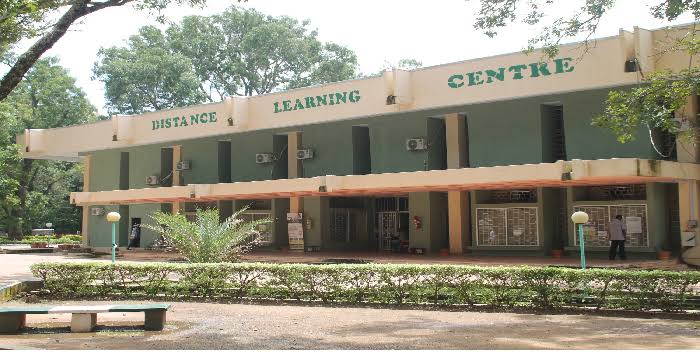
If you want a degree from Ahmadu Bello University but can’t relocate to Zaria, or you’re already working and can’t sit through a four-year full-time programme, the ABU Distance Learning Centre (ABU DLC) is probably one of the first names you’ve come across.
And that raises the real question: is it actually worth applying to, and how does the whole process work?
This guide walks you through everything you need before you commit. You’ll find the courses currently on offer, what each one requires, exactly how the fees are structured, and the steps you’ll go through from application to your first day of classes.
Quick overview
- Institution: Distance Learning Centre, Ahmadu Bello University (ABU DLC)
- Location: Zaria, Kaduna State (with screening and exam centres across Nigeria, the UK, and Saudi Arabia)
- Accreditation: NUC accredited
- Study mode: Fully online (e-learning), with physical screening and final examinations at designated centres
- Levels offered: Undergraduate (B.Sc./BNSc.), Postgraduate Diploma, and Master’s degrees
- Official application portal: apply.abudlc.edu.ng
About ABU DLC
The Distance Learning Centre was set up by Ahmadu Bello University to make its degree programmes accessible to people who can’t attend full-time, on-campus classes. The courses are taught by the same lecturers who teach ABU’s on-campus students, and the certificate you receive at the end carries no distinction that marks it out as a distance learning qualification. It’s the same ABU degree.
Classes, tests, and continuous assessment happen entirely online through the centre’s e-learning platform. The one part that isn’t remote is the final examination, which you’ll sit physically at one of ABU DLC’s designated screening and exam centres.
Courses offered at ABU DLC
Undergraduate programmes (B.Sc./BNSc.)
- B.Sc. Accounting
- B.Sc. Business Administration
- B.Sc. Computer Science
- B.Sc. Economics
- B.Sc. International Studies
- B.Sc. Library and Information Science
- B.Sc. Mass Communications
- BNSc. Nursing Science
- B.Sc. Public Administration
- B.Sc. Political Science
- B.Sc. Sociology
Master’s programmes
- Master of Business Administration (MBA)
- Master in Accounting (MAC)
- Master’s in Disaster Risk Management
- Master in International Affairs and Diplomacy (MIAD)
- Master in Law Enforcement and Criminal Justice (MLCJ)
- Master in Information Management (MIM)
- Master in Public Administration (MPA)
- Master in Public Health (MPH)
Postgraduate diplomas
- Postgraduate Diploma in Education (PGDE)
- Postgraduate Diploma in Management (PGDM)
ABU DLC also runs certificate programmes from time to time. If you’re interested in a shorter, non-degree qualification, it’s worth checking the centre’s academics and programmes page directly, since certificate offerings change more often than the degree courses.
Admission requirements
Requirements differ by programme and by entry route (whether you’re coming in as a fresh candidate through 100 Level, or as a Direct Entry candidate into 200 Level). Below is a summary of what most undergraduate and postgraduate applicants should expect. Because entry requirements can be revised between sessions, always confirm the exact requirements for your specific programme on the official ABU DLC admission requirements page before you apply.
Undergraduate (100 Level, general route)
For most B.Sc. programmes, you’ll need a minimum of five credits in your SSCE, GCE, or NECO result, obtained in not more than two sittings, including English Language, Mathematics, and subjects relevant to your chosen course (for example, Economics for Accounting or Business Administration; Physics and Chemistry for Computer Science).
Unlike full-time ABU admission, you don’t need to sit UTME to apply for the distance learning programme itself. However, if you’re offered admission, you’ll still be required to visit your state’s JAMB office afterwards to regularise your admission on the Distance Learning platform of the JAMB portal, which currently attracts a JAMB service fee.
Direct Entry (200 Level)
Direct Entry into most programmes generally requires two relevant A-Level or IJMB passes, or in some cases an ABU Diploma or a National Diploma with a minimum grade, depending on the course. For instance, Computer Science accepts an ND in Computer Science with Upper Credit, while Business Administration accepts a Diploma in Accounting, Banking, Finance, Insurance, or Management with a Merit pass from ABU.
BNSc. Nursing Science
This programme has an additional layer of requirements. You must already be a registered nurse with the Nursing and Midwifery Council of Nigeria, hold five O’Level credits including English, Mathematics, Physics, Chemistry, and Biology, and present your annual nursing licence (or evidence of renewal payment) at screening.
Master’s and postgraduate diploma programmes
Most Master’s programmes at ABU DLC require a first degree with at least a Second Class Lower or a CGPA of 2.40, five O’Level credits including English and Mathematics, and an NYSC discharge certificate or exemption letter for applicants under 30.
Candidates with a Third Class degree can often still qualify if they have five years of post-graduation work experience, or hold a relevant Postgraduate Diploma.
The Postgraduate Diploma in Education (PGDE) accepts HND holders and first degree holders (Bachelor’s, Master’s, or Doctorate), while the Postgraduate Diploma in Management (PGDM) accepts HND holders with a minimum of Lower Credit, or degree holders with at least a Third Class.
ABU DLC school fees
ABU DLC uses a pay-per-course fee structure rather than one flat tuition figure. That means the total you spend depends on how many courses you register for in a session, which is one of the reasons people find it more manageable than a full upfront tuition bill.
B.Sc. programmes
- ₦10,000 per course
- Acceptance fee: ₦12,500
- Examination fee: ₦20,000 per semester
- Miscellaneous fee: ₦8,500 per session
MBA
- ₦20,000 per course
- Prerequisite courses (where applicable): ₦20,000 per course
- Acceptance fee: ₦12,500
- Examination fee: ₦20,000 per semester
- Miscellaneous fee: ₦8,500 per session
Postgraduate Diploma in Education (PGDE)
- ₦20,000 per course
- Acceptance fee: ₦12,500
- Examination fee: ₦20,000 per semester
- Miscellaneous fee: ₦8,500 per session
To know your actual total for a session, you’ll need to check the course structure for your specific programme, since the number of courses per semester varies. ABU DLC provides a downloadable General Course Structure document that breaks this down, and it’s worth going through before you commit financially.
A word on the application fee itself: it’s paid directly on the application portal at the point of applying. Since this figure isn’t published on the main tuition page and can change between admission cycles, confirm the exact amount on apply.abudlc.edu.ng before you pay.
How to apply to ABU DLC
The application process runs in three broad stages.
Step 1: Apply online
Visit apply.abudlc.edu.ng and complete the application form. Have your credentials (WASSCE, NECO, GCE, or your first degree certificate, depending on the programme) ready before you start, since you’ll need to reference them during the form.
Step 2: Get screened
Once you submit your application and pay the application fee, you’ll receive an email offering provisional admission and inviting you for screening. At screening, you’ll present original copies plus two photocopies of all your credentials for verification. This is done physically at one of ABU DLC’s designated centres, so plan for travel if there isn’t one close to you.
Step 3: Register, pay, and get onboarded
After screening, you’ll register for your courses for the session, make your course payments, and get access to the e-learning platform (Vigidrive), along with any hard copy course materials provided.
For undergraduate students: don’t skip JAMB regularisation
If you’re admitted as an undergraduate, there’s one extra step that catches a lot of new students off guard. You’re required to visit the nearest JAMB state office in your state of domicile to regularise your admission on the Distance Learning Programme platform, and this has to be done immediately after your screening and admission, before your first examination at the centre. It can only be done at a JAMB state office, not at a JAMB CBT centre, and it must be done on the Distance Learning platform specifically, not the part-time or sandwich option. Once you get your regularisation number from JAMB, submit the evidence to ABU DLC’s liaison office or the Secretary’s office at the centre’s headquarters.
Skipping this step, or doing it on the wrong JAMB platform, can create problems with your admission later. It’s a small errand, but it matters.
Where exams and screening happen
Screening and final examinations take place physically, not online. ABU DLC has centres spread across Nigeria’s geopolitical zones, along with locations in Central London (UK) and Jeddah (Saudi Arabia) for students based abroad. Because centre locations can be added, moved, or discontinued between sessions, confirm the current list of active screening and exam centres on the official ABU DLC website before you plan your travel.
Frequently asked questions
Do I need to write JAMB before applying?
No, you don’t need a JAMB result to apply for admission into the ABU DLC undergraduate programme itself. However, once admitted, you’ll still need to regularise your admission through JAMB’s state office as explained above.
Is the ABU DLC certificate different from the on-campus certificate?
No. The certificate awarded is the same ABU certificate given to on-campus graduates, with nothing on it to indicate that the degree was earned through distance learning.
How long does the programme take?
Undergraduate programmes typically run three semesters per year rather than the standard two, which allows students to complete a programme that would normally take four years on campus in about three years, depending on the course and your entry level.
Are the final exams really physical?
Yes. Coursework, tests, and continuous assessment are handled online, but final examinations are written physically at ABU DLC’s designated centres.
Can I apply if I’m outside Nigeria?
Yes. ABU DLC has screening and examination arrangements for students based in the UK and Saudi Arabia, in addition to its Nigerian centres. If you’re elsewhere, reach out to the centre directly to confirm what’s available to you.
Final thoughts
ABU DLC gives you a genuine route to an ABU degree without needing to relocate to Zaria or put your job on hold. The pay-per-course fee structure also makes it more flexible financially than programmes that demand a full tuition payment upfront. That said, admission requirements, fees, and centre locations can all shift between sessions, so treat this guide as your starting point, not your final reference. Before you pay anything, cross-check the specific figures and requirements for your programme on the official ABU DLC website or by speaking directly with their support line.
If you have any questions or need clarification about applying to ABU DLC, kindly drop them in the comment section below, we’ll be glad to help.

3 Comments
Good day sir,
Please when is the closing date for the batch C ABUDLC and how much is the total fee for BNSC Nursing.
Also the portal for registration. Thank you
Is it possible for me to sit final exams at Ahmadu Bellow University chosen place in Kenya
Can someone be come class every Saturday and Sunday